


Strong Law Offices is proud to be a Better Business Bureau Accredited Business, a distinction we have maintained since August...
6 Mar, 2026

Can You Sue Walmart for a Slip and Fall in Illinois? What You Need to Prove
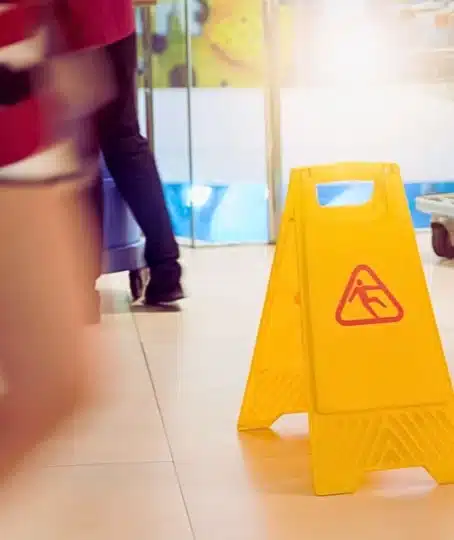
Regarding whether you can sue Walmart for a slip and fall in Illinois, understanding the legal requirements is essential for your financial recovery. Large retail chains have a legal duty to keep shoppers safe from foreseeable harm. However, holding Walmart accountable requires concrete evidence of negligence and an understanding of premises liability law. You must demonstrate that the staff failed to maintain a hazard-free environment. When a major retailer neglects to clean a spill or clear an aisle, they put your health at risk. Navigating the legal aftermath involves gathering prompt evidence, adhering to strict filing deadlines, and pushing back against Walmart’s defense tactics.
For guidance on filing your Walmart premises liability claim, contact Strong Law Offices at 309-393-2928.
Can You Hold Walmart Liable for a Slip and Fall in Illinois?
In Illinois, you can hold Walmart accountable for a slip and fall incident if you can demonstrate that its negligence directly led to your injury. This usually requires evidence that they were aware of, or should have been aware of, a dangerous situation on their property and failed to address it. Illinois law requires property owners to ensure their premises are safe for visitors.
When evaluating liability in a slip and fall case against Walmart, it's essential to consider the level of care owed to customers. Shoppers are categorized as invitees, meaning the store is responsible for creating a safe shopping environment. If a hazard, such as a spill or an item left out of place, remains unaddressed, the store might be held liable for injuries that result. However, merely falling does not establish liability. You must show that Walmart had knowledge of the hazardous condition or should have known about it.
Choosing to sue Walmart for a slip and fall means facing a corporation with considerable resources that may try to deflect blame by claiming the hazard was open and obvious. To counter this, an Illinois slip and fall lawyer will focus on contextual factors, such as distractions or poor lighting. These nuances are essential for building a strong compensation case.
Falls among residents aged 65 and older in Illinois led to over 45,000 emergency visits in 2022. This highlights the urgent need for safety measures in stores and parking lots, as the consequences of these accidents can be severe and long-lasting.
What You Must Prove to Win a Walmart Slip and Fall Lawsuit
To succeed in a Walmart slip and fall lawsuit in Illinois, you need to show that a hazardous condition existed, the store knew about it or should have, it failed to address the issue, and this negligence caused your injuries.
You must establish the four elements of negligence. First is duty, meaning the store's obligation to ensure safety. Second is breach, which requires demonstrating that the hazard was unreasonable and that the store did not take appropriate action. Third is causation, linking the hazard directly to your injury, and fourth is damages, showing that you suffered harm as a result of your slip and fall.
Proving notice can be challenging. You need to demonstrate that the staff either knew about the hazard or that it had been present long enough for them to notice, such as a spill that had been present for a long time. Proving these elements depends on the strength of your evidence, which may include:
- Surveillance footage, which is crucial to demand early to prove exactly how long the hazard existed before your fall.
- Photos and videos of the hazard captured before the staff cleans it up.
- Witness statements from bystanders who saw the fall or the hazard beforehand.
- An official incident report filed immediately after the event.
- Medical records detailing the severity of your injuries.
How Illinois Premises Liability Laws Apply to Walmart Stores
The Illinois Premises Liability Act requires property owners, including retail chains like Walmart, to exercise reasonable care to maintain safe premises for visitors. If you are injured due to a hazardous condition that the store knew or should have known about, Walmart can be held liable for damages.
The Duty of Care and Invitees
Walmart owes a duty of reasonable care to customers. This includes conducting regular inspections for hazards like liquid spills or loose debris. It involves making prompt repairs or providing clear warnings, like wet floor signs. The duty extends beyond the front doors, ensuring the parking lot, aisles, and restrooms remain safe.
Establishing Liability (The Notice Requirement)
To establish liability, you must show the hazard was foreseeable by proving Walmart had actual notice, such as when an employee created or was informed of the hazard, or constructive notice, when the hazard existed long enough for staff to discover it. In Illinois, hazards lasting less than ten minutes are typically insufficient for constructive notice.
Common causes of injury claims include slips and falls on spilled liquids, items improperly stacked that fall from shelves, and unstable displays. Exterior dangers include parking lot hazards like ice, snow, or uneven pavement. For instance, poor lighting accidents occur when exterior bulbs burn out. Furthermore, pedestrian accidents in parking lots happen when walkways are poorly marked. Determining who's at fault in a parking lot accident requires reviewing if the store or a maintenance company failed their duties.
Possible Defenses Used by Walmart
Walmart often claims that hazards were not present long enough to notice or that they were open and obvious. In Illinois, property owners usually aren't liable for injuries from open and obvious hazards like holes or icy spots, as visitors are expected to avoid them. The natural accumulation rule also protects property owners from liability for falls on naturally accumulated ice or snow, as long as they didn't create an unnatural buildup.
How Comparative Negligence Affects Your Claim
Illinois’ modified comparative rule applies, meaning your compensation is reduced based on your share of fault in an accident. Retailers' insurance companies often try to place blame on you, claiming distractions or negligence. If you're found partially at fault, your compensation decreases accordingly. For instance, if awarded $100,000 and found 20% at fault for ignoring a wet floor sign, you'd receive $80,000. If you're over 50% responsible, you can't claim any damages. Gathering strong evidence is key to minimizing your fault and protecting your payout.
The Statute of Limitations
In Illinois, you generally have two years from the date of the accident to file a personal injury lawsuit. Missing this strict legal deadline usually means the court will permanently dismiss your case, preventing you from recovering financial damages for your injuries. Because gathering necessary evidence against a large corporation takes time, it is vital to begin the process promptly.
Documenting the financial impact of the injury is just as important as proving the fall itself. A successful claim should account for all financial losses incurred. If you've been injured on commercial property, contact Strong Law for assistance with proving your claim and quantifying your damages.
Frequently Asked Questions
Can I sue Walmart if I slipped and fell in an Illinois store?
You can file a lawsuit if you prove the store's negligence caused the accident, demonstrating that a hazard existed, the staff knew about it, and failed to correct it.
What evidence is needed to prove Walmart was negligent in a slip and fall case?
You need evidence showing the store had notice of the hazard, such as surveillance video, photographs, eyewitness statements, the store incident report, and medical records.
How long do I have to file a slip and fall lawsuit against Walmart in Illinois?
In Illinois, you have two years from the date of the accident to file a lawsuit, or you lose your right to seek compensation.
About The Author

Categories
About The Author
Related Posts

Key Takeaways A third-party insurance claim is filed against another person's insurance rather than your own. After a car accident,...

Key Takeaways Personal injury lawyers commonly charge a contingency fee rather than an hourly attorney fee. Injury lawyers usually take...