
Key Takeaways You may be able to pursue compensation when broken or unsafe stairs cause your injuries. Property owners and...


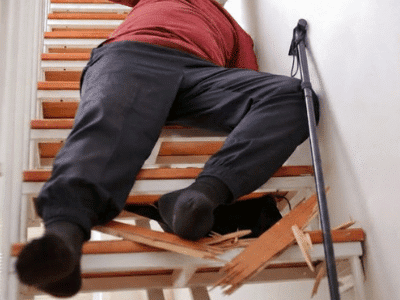
You may be able to sue after falling on broken stairs if a property owner, occupier, or another responsible party failed to use reasonable care and that failure caused your injuries. Broken steps, loose handrails, uneven stair surfaces, and other hazards can lead to premises liability claims, but an injury alone does not automatically establish negligence.
Whether you have a claim depends on what made the stairs dangerous, whether the responsible party knew or reasonably should have known about the condition, and whether the defect caused your fall. If you were injured on unsafe stairs, contact Strong Law Offices at 309-393-2928 to discuss your legal options.
A successful claim generally requires more than proving that you fell on someone else's property. You typically need evidence connecting an unsafe condition to negligence by the party responsible for maintaining the premises.
Illinois's Premises Liability Act provides that owners and occupiers owe lawful entrants a duty of reasonable care under the circumstances regarding the condition of the premises. The statute also identifies limitations involving conditions that are known to the entrant, open and obvious, or not known to the owner or occupier.
Broken stairs can create many hazards, including:
If one of these conditions caused your fall, premises liability lawyers can evaluate the circumstances of the accident and identify responsible parties.
Determining liability starts with identifying who controlled the property and who was responsible for maintaining the staircase. Depending on where the accident happened, a responsible party could be a property owner, commercial tenant, landlord, property management company, or another party responsible for inspection and maintenance. More than one party may have responsibilities related to the property.
Staircases are subject to safety requirements addressing issues such as stair dimensions, handrails, guards, and means of egress. Applicable requirements vary depending on the property, jurisdiction, construction history, and other circumstances. Reviewing applicable building codes may help determine whether the design or condition of a staircase complied with relevant safety requirements.
A code issue does not eliminate the need to prove the other elements of a claim. However, evidence that stairs failed to satisfy an applicable requirement can become part of the broader investigation into whether the property was maintained with reasonable care.
Compensation depends on the nature and extent of your injuries and the losses attributable to the accident. A broken-stair fall can result in fractures, sprains, head injuries, back injuries, or other conditions requiring medical care and time away from work.
Damages may include compensation for medical expenses, future medical care, lost wages, reduced earning capacity, pain and suffering, disability, and other qualifying losses. The seriousness of the injury, necessary treatment, long-term limitations, available evidence, insurance coverage, and disputed liability can all affect the claim.
If you are considering whether to hire a slip and fall lawyer, an attorney can review both the circumstances of the fall and documentation of your losses before evaluating compensation.
Being partially responsible does not necessarily prevent recovery under Illinois law.
Illinois follows a modified comparative negligence rule for negligence claims. Under current law, a plaintiff whose contributory fault is more than 50% of the proximate cause of the injury is barred from recovering damages. If the plaintiff's share of fault is 50% or less, damages are reduced in proportion to that share of fault.
For example, a property owner might argue that you were distracted, ignored a warning, or failed to notice an obvious stair condition. Those allegations do not automatically resolve the case. The available evidence must be considered when determining what happened and how responsibility should be allocated.
If unsafe stairs caused your injury, the central question is not simply whether you fell. A premises liability claim requires examining why the staircase was dangerous, who was responsible for the property, what that party knew or reasonably should have known, and whether the dangerous condition caused your injuries.
Photographs, witness statements, maintenance records, applicable safety requirements, medical documentation, and other evidence can help answer those questions. Acting promptly can also make it easier to preserve evidence before repairs are made or records become difficult to obtain.
The circumstances of every stairway accident are different, so determining whether you can sue after falling on broken stairs requires an evaluation of the specific property condition, your injuries, and the conduct of the parties involved.
If you were injured after falling on broken or unsafe stairs, call the slip and fall lawyers at Strong Law Offices at 309-393-2928.

Key Takeaways You may be able to pursue compensation when broken or unsafe stairs cause your injuries. Property owners and...

Key Takeaways Illinois does not require a dog to have bitten someone previously before an owner can potentially be held...
Strong Law Offices is proud to be a Better Business Bureau Accredited Business, a distinction we have maintained since August...