

Key Takeaways Illinois now uses staffing data beginning with the July–September 2026 quarter to calculate new nursing home staffing penalties....


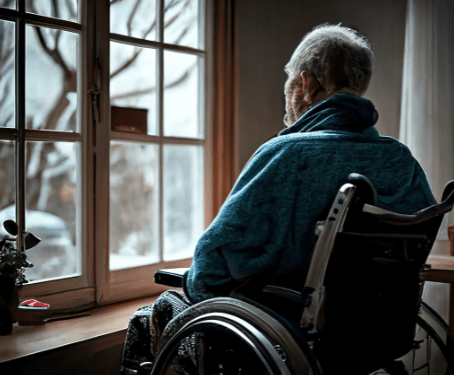
Illinois has begun applying new financial penalties to nursing homes that fail to meet minimum staffing requirements. Under the updated Nursing Home Care Act, penalties are calculated using staffing data, with increasing fines for repeated violations.
For residents and families, these changes strengthen oversight of a problem that can contribute to missed medications, untreated injuries, falls, and other forms of neglect.
If your loved one has suffered nursing home neglect in Illinois, call Strong Law Offices at (309) 688-5297 for a free consultation.
Illinois has taken another step toward holding nursing homes accountable for staffing shortages.
Under the Illinois Nursing Home Care Act, facilities that fail to meet minimum direct-care staffing requirements face financial penalties based on their staffing deficiencies.
The updated enforcement provisions apply to staffing data collected from July 1 through September 30, 2026, and subsequent quarters. The Illinois Department of Public Health evaluates compliance using payroll-based staffing information and resident census data.
The penalties increase with repeated violations:
The law generally excludes staffing categories with shortfalls of 10% or less and allows limited exceptions for qualifying unforeseen circumstances.
These provisions establish financial consequences for facilities that fall substantially below staffing requirements.
But for families, the larger question is what happens to residents when too few caregivers are available.
Nursing home residents often depend on staff for medication, mobility, hygiene, meals, and medical monitoring. When a facility lacks sufficient qualified caregivers, essential tasks may be delayed or missed entirely.
A resident who needs assistance walking may fall while waiting for help. Someone unable to reposition independently may develop pressure sores. A patient requiring regular medication or medical treatment may experience dangerous complications when care is interrupted.
These are not simply scheduling problems. They can become serious failures of care with lasting consequences.
Illinois nursing homes have a responsibility to provide appropriate care based on residents' needs. Staffing shortages do not automatically establish negligence, but they can become important evidence when investigating preventable injuries.
Not every staffing shortage results in an injury. Likewise, not every injury means a facility was understaffed.
The critical issue is whether the nursing home failed to provide required care and whether that failure caused harm.
For example, a facility might repeatedly leave residents unattended despite documented fall risks. Staff may fail to follow repositioning schedules, administer prescribed treatments, or respond to significant changes in a resident's condition.
These circumstances can raise questions about nursing home abuse and neglect, particularly when management knew staffing was inadequate but failed to address the resulting risks.
A negligence investigation may examine staffing schedules, medical records, care plans, incident reports, employee testimony, and previous complaints.
The goal is to determine not merely whether the facility was short-staffed, but whether its failures caused a resident's injury.
A staffing citation may provide useful evidence, but it does not automatically establish liability in a civil lawsuit.
State enforcement proceedings focus on regulatory compliance. An individual injury claim examines whether the facility breached a duty of care and caused compensable harm.
A nursing home could face staffing penalties without a particular resident having a viable injury claim. Conversely, a resident may have grounds for legal action even when the facility has not received a staffing citation.
This distinction matters because families should not assume that the absence of a government penalty means their loved one received appropriate care.
Families are often the first to notice changes in a resident's condition.
Unexplained bruises, pressure sores, poor hygiene, missed medications, sudden weight loss, or repeated unanswered calls for assistance may indicate inadequate care.
If you suspect neglect, prioritize your loved one's immediate medical needs. Document concerning conditions, record dates and conversations, and request relevant medical records.
Families can also report suspected nursing home abuse in Illinois to the appropriate authorities.
When a resident has suffered significant harm, an attorney can investigate whether staffing practices, inadequate supervision, or other failures contributed to the injury.
Understaffing alone does not automatically establish a successful lawsuit. However, families may have grounds for a claim when inadequate staffing contributes to negligent care that causes injury or death.
Resident consequences of nursing home neglect include falls, fractures, pressure sores, dehydration, infections, medication-related complications, and worsening medical conditions.
A regulatory fine is not a prerequisite for pursuing a nursing home negligence claim. Liability depends on the facility's conduct, the applicable legal standards, and the resulting harm.
Illinois's new staffing penalties create additional financial consequences for nursing homes that fail to meet minimum staffing requirements. But regulatory enforcement cannot undo the harm caused when vulnerable residents go without necessary care.
When staffing failures contribute to serious injuries or wrongful death, families deserve answers and accountability.
Strong Law Offices represents nursing home neglect victims throughout Illinois, with offices in Peoria, Bloomington, Springfield, and Chicago. Call (309) 688-5297 today for a free consultation. We can investigate the facility's conduct, evaluate your legal options, and help seek the compensation your family deserves.

Key Takeaways Illinois now uses staffing data beginning with the July–September 2026 quarter to calculate new nursing home staffing penalties....

Key Takeaways Eight members of a Bloomington family were hospitalized after an August 25 house explosion and fire. The cause...
Key Takeaways You may be able to pursue compensation when broken or unsafe stairs cause your injuries. Property owners and...